This project explores a return to Nikola Tesla’s original philosophy of energy generation: high frequency, mechanically driven, and fundamentally robust.
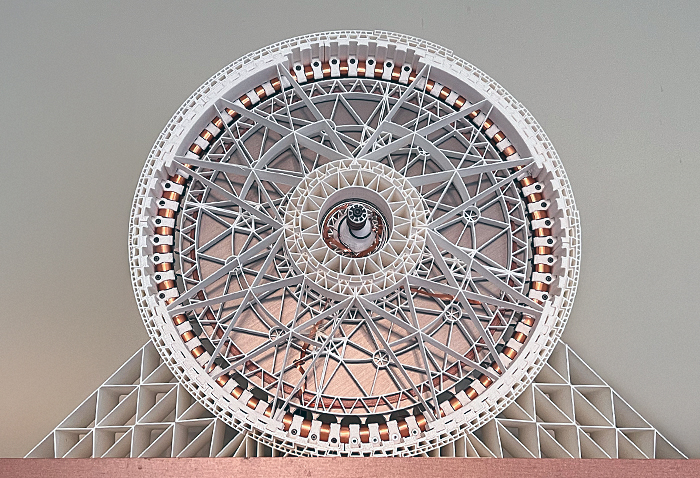
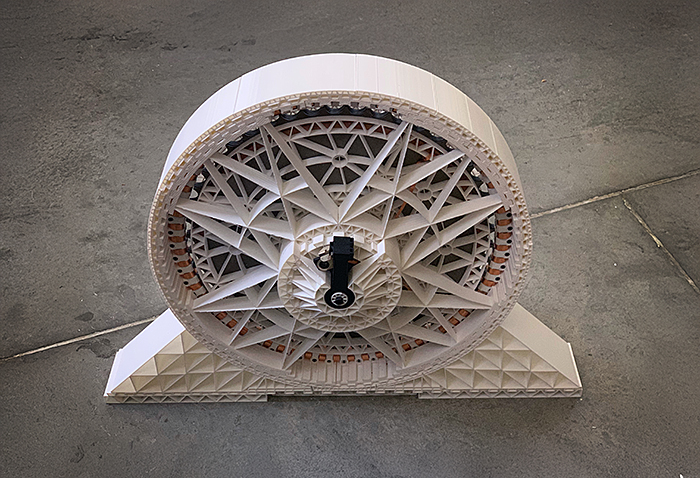
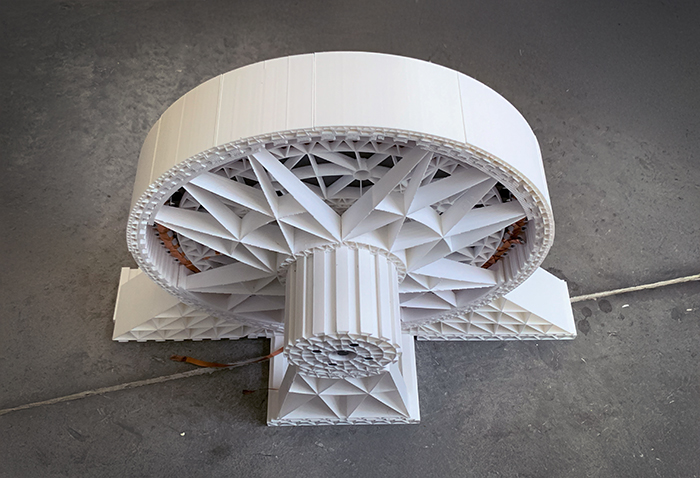
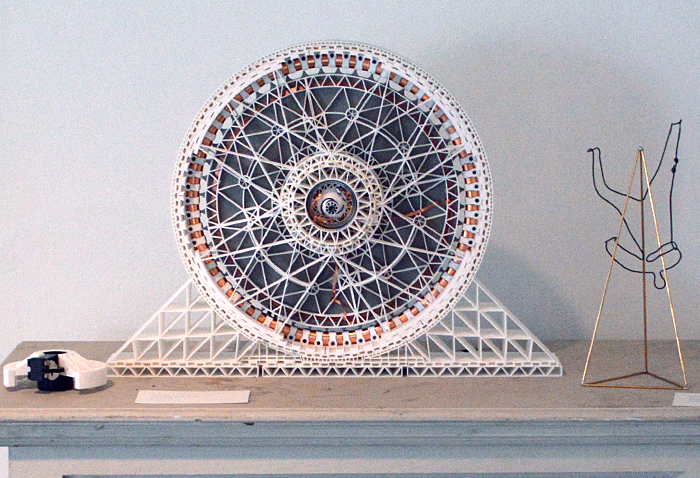
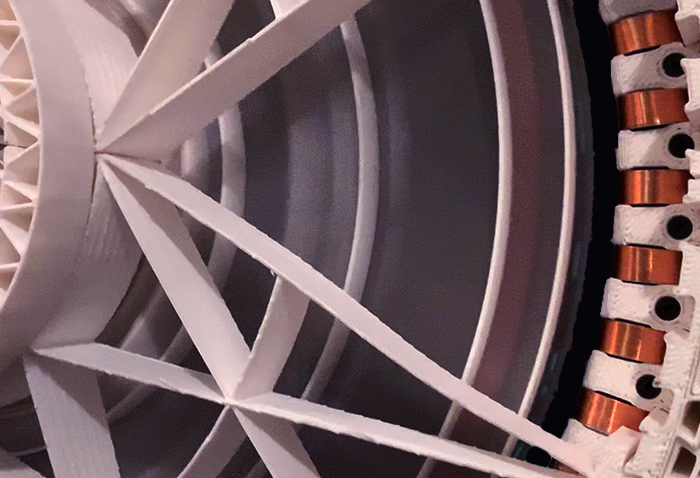
The 24-inch diameter alternator is a fully 3D-printed platform designed to investigate the use of electromagnetic excitation and rotating field geometry as an alternative to modern solid-state switching and semiconductor-dependent drive systems. Rather than relying on fragile electronics or spark gaps, magnetic fields are established and modulated through purely electromechanical means.
At the heart of the design is an electromagnet rotor, energized through proven automotive-grade carbon brush technology, supplying magnetizing current to the rotor field while in motion. This approach mirrors early industrial generators, combining durability with controllable excitation.
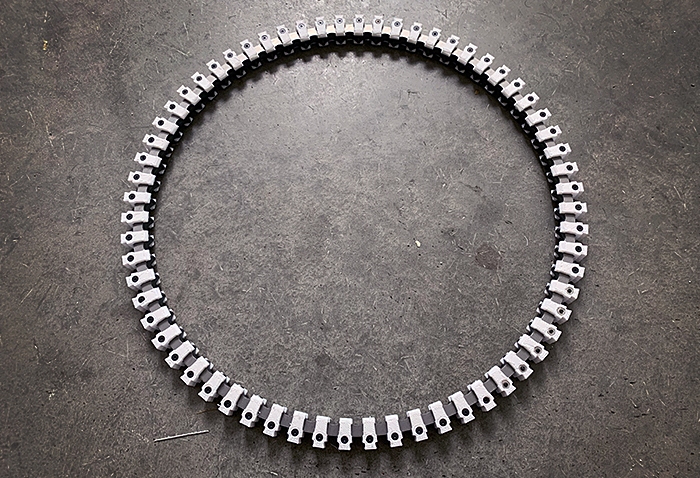
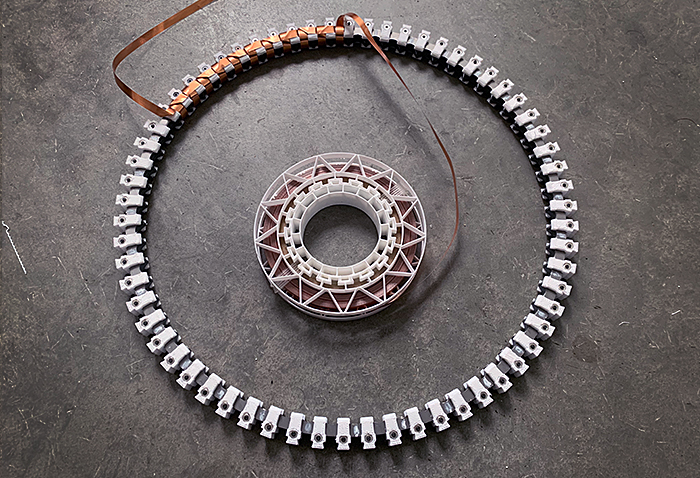
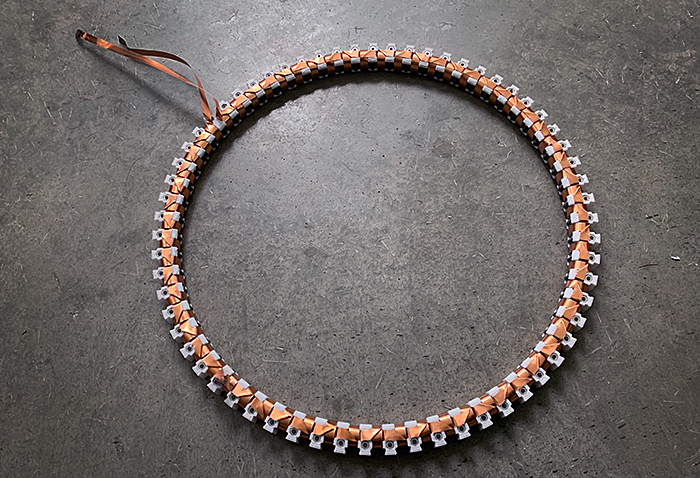
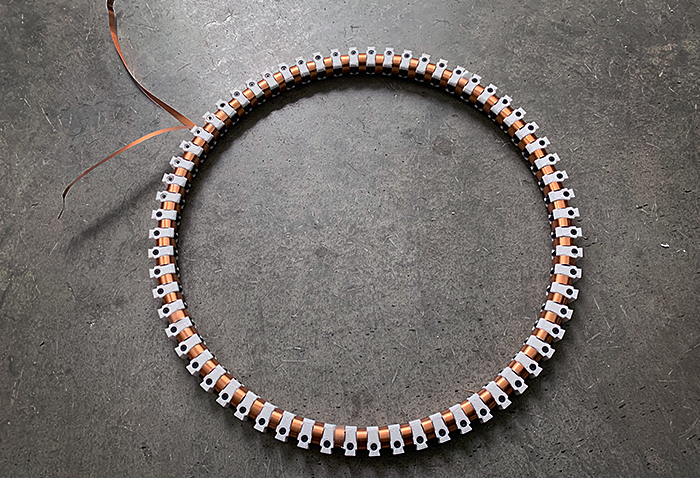
The stator consists of 64 poles, wound for single-phase operation, enabling kilohertz-range electrical output when driven at moderate rotational speeds. When coupled to a high-speed brushless motor, the system demonstrates how frequency multiplication can be achieved through pole count and geometry rather than electronic switching.
This alternator is not intended as a commercial generator, but as a research platform — a physical experiment in how mechanical motion, magnetic fields, and frequency interact when guided by first principles rather than modern convenience.
The work stands as an exploration of what becomes possible when energy systems are designed to be mechanically expressive, electrically resilient, and intellectually honest — much in the spirit of Tesla’s original machines.